
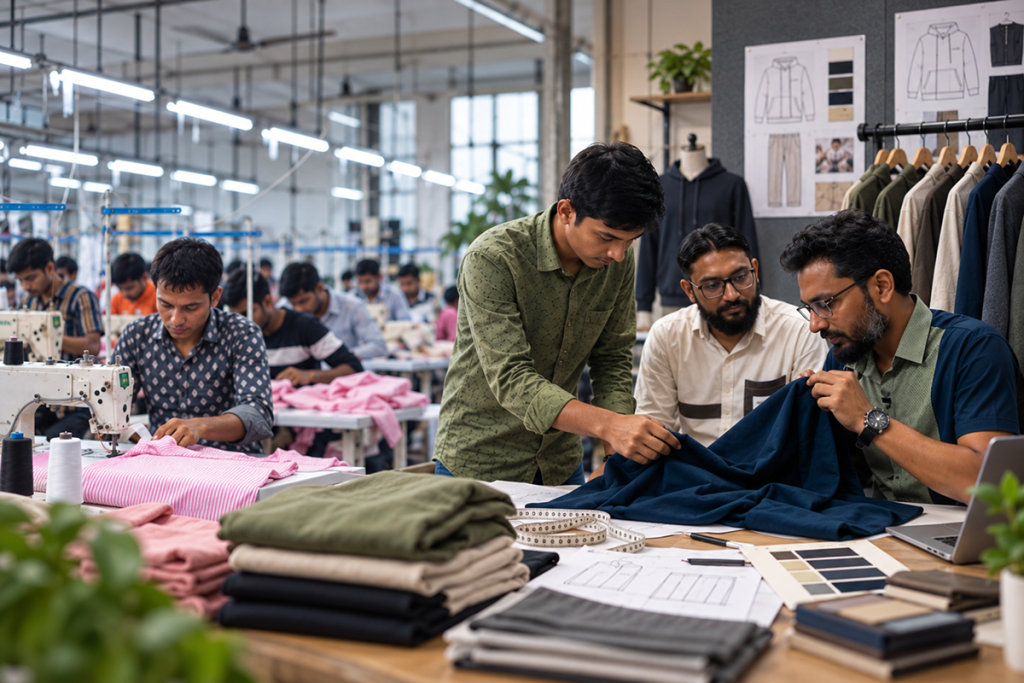
Choosing the right clothing manufacturer in Ludhiana affects your brand quality, prices, and delivery. Ludhiana is one of the most reputable cities for businesses in the same field due to the many knitting and hosiery production companies in the area. However, price must not be the only reason for selecting a manufacturer. You need to consider a variety of factors such as the manufacturer’s production capacity, minimum order needed, experience, product knowledge, communication, fabric quality, and pricing.
Why Choose a Garment Manufacturer in Ludhiana?
Because of its history in the hosiery and knitting industries, Ludhiana has an established industrial base. This gives apparel companies a convenient way to manufacture or source different articles of clothing. As a result, companies in neighboring areas can source clothing manufacturers and, in some cases, source apparel products. Ludhiana has a well-established local supply of T-shirts, sweatshirts, as well as hoodies and other knitwear. Because of this, companies can more conveniently handle sampling, adjustments to, and large-scale production of these items.
What Ludhiana Is Known For
Ludhiana is known for its knitwear, hosiery, and knitted outerwear. But it is also an important city for manufacturing many types of goods such as T-shirts, sweatshirts, hoodies, tracksuits, and winter wear. So Ludhiana is a good choice for brands that produce these kinds of goods. But remember that the quality differs from producer to producer.
Define Your Clothing Brand’s Manufacturing Needs First
Before contacting a manufacturer, decide exactly what you want to produce. Your product type, fabric, quantity, price range, sizes, and target customer will affect the right manufacturing setup. A clear product brief also makes quotations easier to compare. Instead of asking only for a price, you can discuss the same specifications with every manufacturer. This step saves time and prevents confusion later.
Create a Simple Manufacturer Brief
Your brief should include the garment type, fabric composition, GSM, colours, size range, order quantity, branding requirements, packaging, and expected delivery date. The more clearly you explain your requirements, the fewer production mistakes you’ll face later.
Check the Manufacturer’s Product Expertise
Just because a manufacturer makes a lot of garments doesn’t mean they’re good at all of them. You want someone with experience in your exact clothing type and production style. Let’s say you’re starting a T-shirt line; you’ll need a manufacturer who actually knows their way around knitted fabrics. If you’re working on sportswear, you want folks who get stretch fabrics and know how to handle performance gear. Always match their specialty to your needs.
Match Their Experience With Your Product
Ask to see samples similar to your planned collection. Check their previous work for garment construction, stitching, finishing, and overall quality. This gives you a better idea of whether their existing skills match your expectations before you commit to bulk production.
Inspect Fabric and Garment Quality
Quality starts with the fabric, not just the finished garment. Check the material, GSM, colour, texture, stitching, measurements, seams, and finishing before approving production. Always request samples when possible. A physical sample can reveal problems that may not appear in photographs or product descriptions.
What to Check in a Garment Sample
Use the sample to check several important areas before approving bulk production.
| Quality Area | What to Check |
| Fabric | Composition, GSM, texture, and feel |
| Stitching | Strength, neatness, and consistency |
| Measurements | Size accuracy and garment fit |
| Colour | Shade and colour consistency |
| Finishing | Loose threads and clean seams |
| Shrinkage | Changes after washing |
| Printing | Detail, placement, and durability |
| Embroidery | Stitch quality and design accuracy |
Compare MOQ and Production Capacity
Minimum order quantity, or MOQ, can have a major effect on your budget. A large MOQ may create excess stock, especially when your clothing brand is still testing new products. You should also check production capacity. A manufacturer who handles small orders well may need different resources when your monthly volume grows.
MOQ Questions to Ask
Ask how many units they require per style, colour, and size. Also ask whether sample orders have separate requirements and whether repeat orders can use smaller quantities. Discuss larger production runs as well. This helps you understand whether the manufacturer can support your brand as demand changes.
Ask About Custom Manufacturing and Private Labelling
Some brands need ready-made garments. Others need complete custom clothing production. Decide whether you need custom patterns, fabrics, colours, trims, labels, or packaging. Private labelling can also help create a consistent brand identity. Confirm which branding services the manufacturer handles before signing your production agreement.
Branding Services to Look For
Depending on your product, you may need custom neck labels, printed labels, embroidery, screen printing, heat transfers, hang tags, or branded packaging. Ask whether these services are handled in-house or through outside suppliers. This can affect both pricing and production timelines.
Evaluate Production Lead Times and Delivery
A low production price won’t help if your stock arrives after your planned launch. Ask about production lead time for samples, bulk orders, and repeat production. Seasonal brands should pay extra attention to deadlines. Winterwear, festive collections, and promotional launches often depend on having products ready at the right time.
Questions About Lead Time
Ask how long sampling takes and when bulk production can begin after approval. You should also discuss fabric delays, urgent orders, and possible production hold-ups. Get important timelines in writing. Clear dates make it easier to plan inventory, marketing, and product launches.
Check Quality Control Before Placing a Large Order
Good quality control should happen throughout production rather than only at the final stage. Fabric, cutting, stitching, finishing, and packing can all affect the finished product. Ask how the manufacturer checks measurements, stitching, fabric defects, colour differences, and finishing. A clear process can reduce problems before garments leave the facility.
Build a Simple Quality Control Process
A practical process can follow this order: fabric inspection, sample approval, cutting, stitching, finishing, final inspection, and packing. This gives both sides clear checkpoints. It also makes it easier to identify where a production problem started.
Compare Garment Manufacturing Costs Carefully
The cheapest quote may not represent the lowest overall cost. Your final price can include fabric, labour, trims, printing, packaging, sampling, wastage, and other production expenses. Ask every manufacturer to explain the quotation clearly. Comparing the same cost categories helps you understand why one quote differs from another.
What Should a Manufacturer Quote Include?
| Cost Area | What to Confirm |
| Fabric | Type, composition, GSM, and quantity |
| Manufacturing | Production cost per garment |
| Trims | Buttons, zips, labels, and other items |
| Printing | Method, placement, and quantity |
| Packaging | Individual and bulk packing |
| Sampling | Sample development charges |
| Delivery | Dispatch or shipping terms |
Check Communication and Customer Support
Talking clearly can save you from expensive mistakes in production. Make sure your manufacturer gets your specifications, answers your questions, and gives you honest updates about your order. This is even more crucial if you’re working from a distance. Write down exactly what you want, approve samples, and check in often; that way, everyone stays on the same page.
Signs of Good Manufacturer Communication
Look for clear quotations, timely replies, written specifications, sample feedback, realistic timelines, and direct answers. A manufacturer doesn’t need to promise everything. Honest communication about limits and delays can be more useful for long-term production.
Verify the Manufacturer Before Signing a Deal
Before placing a major order, verify the manufacturer’s business details and actual production capabilities. If possible, visit the facility or arrange a video inspection. Check the workspace, machinery, storage, workforce, and production flow. You can also ask for relevant client references and previous product samples.
What to Verify
| Area | What to Check |
| Factory | Location and production setup |
| Capability | Garment types and order volume |
| Equipment | Machinery suited to your products |
| Quality | Inspection and approval process |
| References | Previous or current client experience |
| Documentation | Relevant business records |
| Payment | Terms, deposits, and balances |
| Delivery | Production and dispatch timelines |
Why a Long-Term Manufacturing Partner Matters
A reliable manufacturing relationship can make future production easier. Once a manufacturer understands your measurements, fabrics, labels, and quality standards, repeat orders may require less explanation. Long-term cooperation can also help when you introduce new products. Your manufacturer already understands your brand requirements and production expectations.
From First Sample to Repeat Orders
The process usually starts with a product brief and sample. After corrections and approval, the manufacturer moves to bulk production, quality checks, delivery, and future reorders. Keeping approved specifications and samples can make repeat production more consistent.
Questions to Ask a Garment Manufacturer in Ludhiana
Price is not the only thing to consider when evaluating potential manufacturers. Look into minimum order quantity (MOQ), the fabrics they work with, sampling processes, how much branding they allow, what kind of quality control they have in place, what payment terms are available, when they can realistically deliver, and how they handle fabric, printing, and embroidery, as well as end-unit and final assembly and packaging.
Manufacturer Comparison Table
| Factor | What to Compare |
| Experience | Relevant garment expertise |
| MOQ | Minimum production quantity |
| Quality | Sample and inspection standards |
| Capacity | Ability to handle your order |
| Customisation | Branding and product development |
| Lead Time | Sampling and bulk production |
| Pricing | Complete production cost |
| Communication | Response and update process |
Common Mistakes When Choosing a Garment Manufacturer
Choosing by price can create problems later, especially if price is the only factor to consider. Poor samples, specifications, high MOQs, weak communication, or missed deadlines can increase overall production cost. Unclear specifications can cause confusion and delays. Another common mistake is approving production without testing a sample. Even a small issue with fabric, measurements, or stitching can affect hundreds of garments.
Mistakes to Avoid
Don’t accept the cheapest quote without checking what it includes. Don’t skip sample approval or ignore fabric composition. You should also confirm measurements, packaging, delivery dates, payment terms, and production capacity before placing your order.
Final Checklist for Choosing a Garment Manufacturer in Ludhiana
Before making your decision, compare each manufacturer against the same requirements. This makes the process more objective and helps you spot missing information. Your final choice should fit your product, budget, quality expectations, order size, and future growth plans. A strong manufacturing setup should work for both your first order and later collections.
| Checkpoint | What You Need |
| Product expertise | Manufacturer makes your garment type |
| Fabric | Composition and GSM confirmed |
| Sample | Approved before bulk production |
| MOQ | Suitable for your order size |
| Quality | Inspection process is clear |
| Branding | Labels and packaging available |
| Price | Complete quotation provided |
| Lead Time | Production date agreed |
| Communication | Clear updates and responses |
| Capacity | Can support future orders |
Conclusion
Choosing the right garment manufacturer in Ludhiana takes more than comparing prices. Check product expertise, fabric quality, MOQ, production capacity, branding services, quality control, and delivery terms. Ludhiana’s established hosiery and knitted outerwear industry can give clothing brands access to an experienced apparel manufacturing base. Take time to compare samples and production details before placing a large order. The right manufacturing partner should meet your current needs while supporting your brand as it grows.